✨ This article was AI edited. Editorial responsibility: BelizeanStudies.com.
Produced with AI. This article was artificially generated. Editorial responsibility: BelizeanStudies.com.
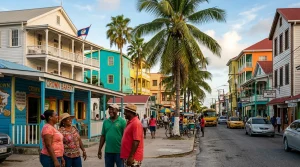
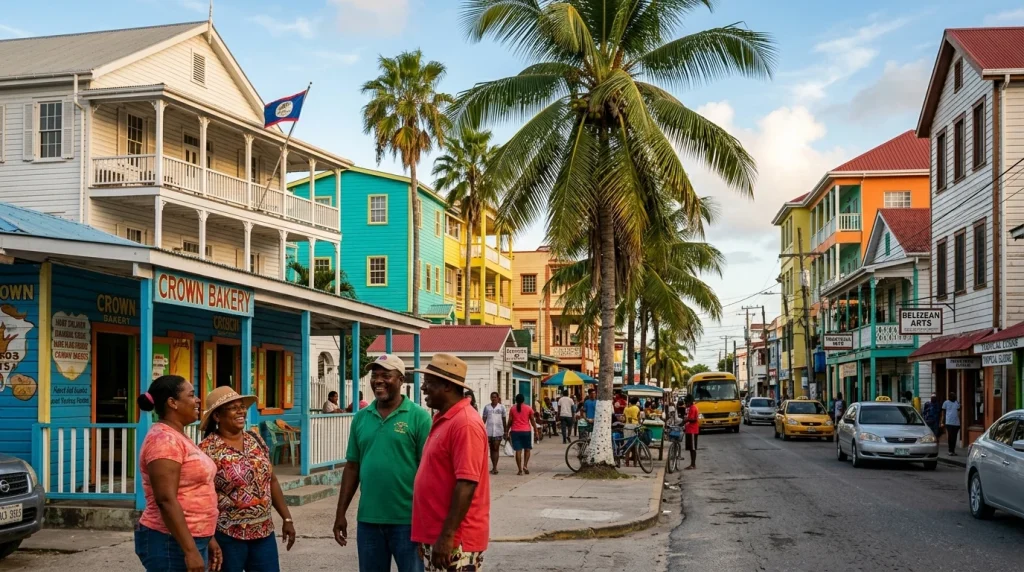
Belize holds a truly unique distinction on the American mainland: it is the only country in Central America where English is the official language. While surrounded by Spanish-speaking neighbors like Mexico and Guatemala, travelers visiting Belize step into a nation where road signs, official government documents, school curricula, and legal proceedings are conducted entirely in English. But how did this small tropical nation nestled on the Caribbean coast of Central America become an English-speaking enclave?
The answer lies in more than three centuries of complex colonial rivalries, pirate settlements, timber treaties, and a vibrant melting pot of diverse cultures that shaped modern Belizean identity. In this comprehensive guide, we explore the deep historical roots of why Belize speaks English, the colorful linguistic reality of everyday communication, and how standard English coexists with Belizean Kriol, Spanish, Maya, and Garifuna.
Historical Origins: Pirates, Logwood, and British Settlement
To understand why English took root in Belize, one must look back to the early 17th century. While Spanish conquistadors laid claim to the entire Yucatan peninsula and Central American isthmus during the 16th century, they found the dense mangrove coastlines, shallow barrier reefs, and fierce indigenous Maya resistance in what is now Belize difficult to govern. As a result, Spain established little direct administrative presence in the region.
In 1638, a group of English and Scottish sailors, buccaneers, and shipwrecked privateers—collectively known as the Baymen—began establishing camps along the mouth of the Haulover Creek and Belize River. Originally utilizing the shallow coastal cayes as hideouts to raid Spanish treasure galleons, these British settlers quickly discovered a far more lucrative and legal commodity: Logwood (Haematoxylum campechianum).
Logwood was prized across Europe for producing rich black, purple, and blue textile dyes that fueled the expanding European industrial revolution. The British settlement grew around the harvest and export of timber, attracting more British merchants and laborers.
| Historical Milestone | Year / Period | Significance to English Language Adoption |
|---|---|---|
| First British Baymen Settlements | 1638 | English buccaneers settle Belize coast to extract logwood; English becomes the working trade language. |
| Burnaby’s Code | 1765 | First formal legal code drafted in English by British Admiral Sir William Burnaby to govern the settlement. |
| Battle of St. George’s Caye | 1798 | British Baymen and enslaved Africans defeat the Spanish naval invasion, permanently cementing British control. |
| Colony of British Honduras | 1862 | The territory is formally declared a British Crown Colony, institutionalizing English as the official language. |
| National Independence | 1981 | Belize achieves peaceful independence from Great Britain, retaining English as its official national language. |
The Transition to British Honduras and Mahogany Logging
Throughout the 18th century, Spain and Britain signed treaties (such as the Treaty of Paris in 1763 and the Treaty of Versailles in 1783) allowing British subjects to cut timber in designated areas while maintaining nominal Spanish sovereignty. However, the economic focus shifted from logwood to Mahogany, which required deeper inland exploration and larger labor forces.
British woodcutters brought enslaved Africans to work in the logging camps. The intense daily interaction between British foresters and African workers led to the emergence of Belizean Kriol, an English-lexified creole language that served as a common bridge of communication across different linguistic backgrounds.
The turning point of British sovereignty came in September 1798 at the Battle of St. George’s Caye. A Spanish naval fleet attempted to seize the settlement once and for all, but the Baymen and their African allies mounted a fierce defense and repelled the Spanish forces. Spain never attempted to claim the territory again, paving the way for Great Britain to formally designate the settlement as the Crown Colony of British Honduras in 1862.
The Multilingual Reality of Modern Belize
Although English is the official language of government, education, commerce, and media, Belize is culturally and linguistically diverse. According to national census data and sociolinguistic research, the vast majority of Belizeans are bilingual or multilingual.
1. Belizean Kriol (Creole)
Belizean Kriol is the cultural heartbeat of the nation. Spoken by over 80% of the population as either a first or second language, it features English vocabulary structured around West African grammatical and phonological frameworks. It is lively, expressive, and heard everywhere on the streets, in music, and in informal social gatherings.
2. Spanish
Due to historical migrations (including Mestizo refugees fleeing the Caste War of Yucatan in the 1840s) and recent immigration from neighboring Guatemala, Honduras, and El Salvador, Spanish is widely spoken, especially in northern districts like Corozal and Orange Walk, as well as the western Cayo District. More than 50% of Belizeans speak fluent Spanish.
3. Garifuna
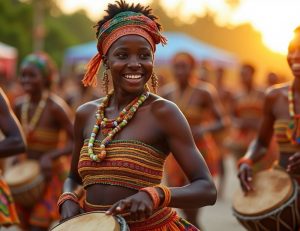
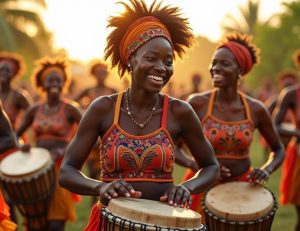
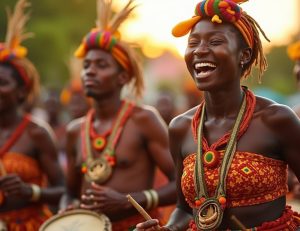
The Garinagu (Garifuna people) arrived in Belize in 1802, bringing a rich Afro-Indigenous culture and their distinct Arawakan-based language. Recognized by UNESCO as a Masterpiece of the Oral and Intangible Heritage of Humanity, Garifuna is actively preserved in southern communities such as Dangriga, Hopkins, and Punta Gorda.
4. Maya Languages (Q’eqchi’, Mopan, Yucatec)
Direct descendants of ancient Maya civilizations continue to speak indigenous Mayan languages. Q’eqchi’ and Mopan Maya remain vibrant across the Toledo and Cayo districts, preserving centuries-old astronomical and agricultural vocabulary.
5. Plautdietsch (Low German)
Starting in 1958, traditional Mennonite communities migrated to Belize from Mexico and Canada. In settlements like Spanish Lookout and Blue Creek, Plautdietsch and Standard German are spoken alongside English and Spanish.
| Language | Estimated Speakers | Primary Regions | Primary Usage |
|---|---|---|---|
| English (Official) | 100% (literate pop.) | Nationwide | Government, Schools, Courts, Tourism, Business |
| Belizean Kriol | 80%+ | Belize District, Cayes, Nationwide | Daily conversation, culture, music, informal social life |
| Spanish | 50%+ | Corozal, Orange Walk, Cayo, San Pedro | Commerce, family life, cross-border trade |
| Garifuna | 5-8% | Stann Creek, Toledo (Hopkins, Dangriga) | Cultural ceremonies, ancestral music, community gatherings |
| Maya (Q’eqchi’ / Mopan) | 8-10% | Toledo District, Southern Cayo | Traditional farming communities, village councils |
| Plautdietsch (Low German) | 3-4% | Spanish Lookout, Blue Creek, Shipyard | Mennonite agricultural communities, family worship |
Common Belizean Kriol Phrases for Visitors
English-speaking travelers will find communicating in Belize effortless, but learning a few basic Kriol expressions will instantly charm locals and enrich your cultural experience:
- “Weh di gwaan?” — What’s going on? / How are you doing? (The standard everyday greeting).
- “Ah deh pan bat” — I am doing fine / I’m getting by.
- “Mi name…” — My name is…
- “Gud maanin / Gud aafanoon” — Good morning / Good afternoon.
- “Da weh time now?” — What time is it right now?
- “Cho!” — Expression of surprise, disbelief, or mild annoyance.
- “Lata!” — See you later / Goodbye.
Why Belize’s English Heritage Matters for Travelers and Expats
Belize’s status as an English-speaking country offers significant structural advantages for international visitors, retirees, and investors:
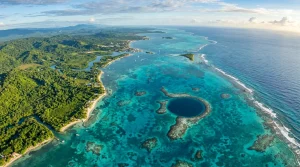
- Effortless Navigation & Tours: Whether booking a diving trip to the Great Blue Hole, exploring ancient Mayan temples at Xunantunich, or navigating local bus schedules, guides and operators speak fluent English.
- Legal System & Property Ownership: Belize’s legal system is based on British Common Law. Real estate contracts, property deeds, and banking transactions are all drafted in English, providing clear transparency for international buyers.
- Education & Work: Children attending school in Belize learn standard English grammar and British/American literature, making transition into foreign universities seamless.
- Healthcare Communication: Medical consultations with doctors and pharmacists are straightforward and free of language barriers.
Frequently Asked Questions
Is English the first language spoken by everyone in Belize?
While English is the official language taught in all schools and used in government, most Belizeans grow up speaking Belizean Kriol or Spanish at home, becoming fully fluent in Standard English through the education system.
Do I need to speak Spanish to travel in Belize?
No. You can travel anywhere in Belize—from Ambergris Caye to Punta Gorda—and communicate completely in English. Knowing basic Spanish can be helpful in western and northern border towns, but it is never required.
When did British Honduras change its name to Belize?
The colony officially changed its name from British Honduras to Belize in June 1973, achieving full constitutional independence within the Commonwealth of Nations on September 21, 1981.
What accent do Belizeans have when speaking English?
Belizean English accents carry a melodious Caribbean cadence, blending classic British grammatical inflections with relaxed West Indian rhythm and vowel pronunciations.
Get our latest guides, news, and insights highlighted in your Google Search & AI Overviews.